
Center for Chromosome Stability
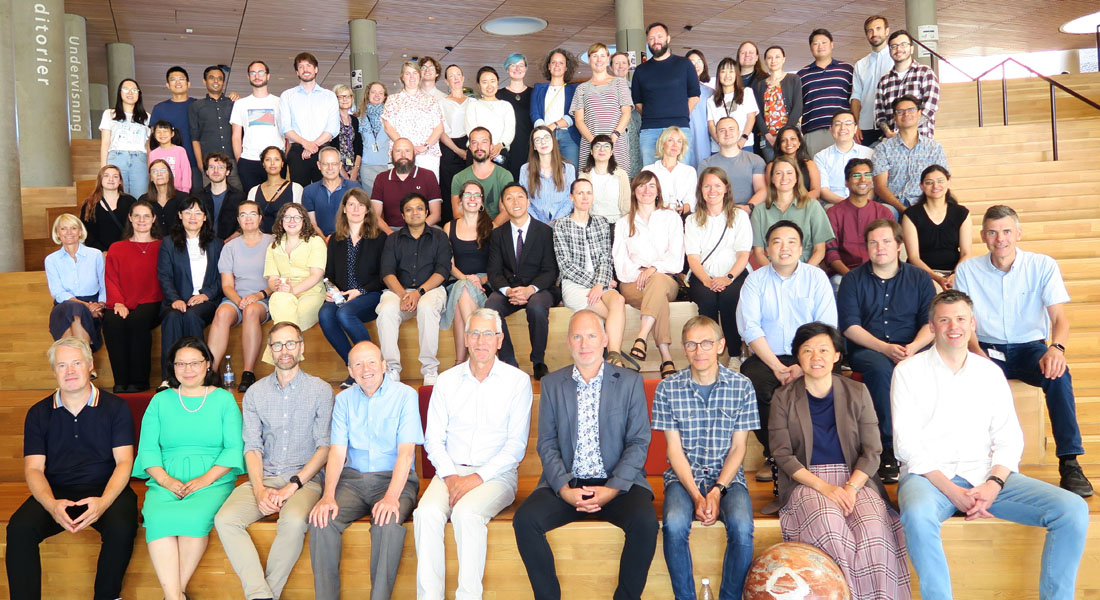
The DNRF Center for Chromosome Stability (CCS) was in operation from March 2015 until August 2025
The CCS was a research center at the University of Copenhagen dedicated to understanding the causes and consequences of chromosome instability.
It was established through a generous grant from the Danish National Research Foundation (DNRF).
The CCS was based in the Department of Cellular and Molecular Medicine, Panum Institute, and had strong connections during its funding period to the Nordea Center for Healthy Aging, the Department of Biology and the NNF Center for Protein Research.
The mission of the CCS was to conduct basic research to understand in mechanistic detail how cells minimized damage that could generate chromosomal instability.
It is well established that chromosome instability is an underlying cause of several age-related disorders, including cancer and neurodegenerative diseases. Changes in chromosome number and structure can be triggered not only by DNA damaging agents, but also by intrinsically unstable regions of the human genome itself (the so-called ‘enemies within’).
The overarching goal of CCS was to functionally annotate these unstable regions and determine how they drive tissue aging and limited cell immortality.
An important long-term aim was to understand how genome instability can trigger age-associated disorders in humans, including cancer, neurodegeneration and impaired fertility.
The different teams in the CCS possessed complementary expertise in genetics, biochemistry and molecular and cell biology.
Research at CCS investigated the cellular mechanisms that preserve genome integrity and prevent chromosome instability. The center studied how DNA replication, repair and chromosome segregation are coordinated to maintain stable genomes.
Using approaches from genetics, biochemistry, structural biology and molecular and cell biology, the research groups examined how replication stress and DNA damage responses affect chromosome stability. Particular attention was given to molecular processes that protect the genome during cell division and DNA replication.
Together, these studies helped clarify how failures in genome maintenance contribute to aging and diseases such as cancer and neurodegenerative disorders.
The CCS comprised seven core research groups, together with two affiliated groups.
The groups covered complementary expertise in genetics, biochemistry, structural biology and molecular and cell biology, forming the scientific foundation of the center.
Affiliated Research Groups
- Minocherhomji, S., Ying, S., Bjerregaard, V.A., Bursomanno, S., Aleliunaite, A., Wu, W., Mankouri, H.W., Shen, H., Liu, Y. and Hickson, I.D. (2015) Replication stress activates DNA repair synthesis in mitosis. Nature 528, 286-290.
- Haahr, P., Hoffmann, S., Tollenaere, M., Ho, T., Toledo, L., Mann, M., Bekker-Jensen, S., Raschle, M. and Mailand, N. (2016). Activation of the ATR kinase by the RPA-binding protein ETAA1. Nature Cell Biology 18, 1196-1207
- Gruhn JR, Zielinska AP, Shukla V, Blanshard R, Capalbo A, Cimadomo D, Nikiforov D, Chan AC, Newnham LJ, Vogel I, Scarica C, Krapchev M, Taylor D, Kristensen SG, Cheng J, Ernst E, Bjørn AB, Colmorn LB, Blayney M, Elder K, Liss J, Hartshorne G, Grøndahl ML, Rienzi L, Ubaldi F, McCoy R, Lukaszuk K, Andersen CY, Schuh M, Hoffmann ER. Chromosome errors in human eggs shape natural fertility over reproductive life span. Science. 2019 Sep 27;365(6460):1466-1469.
- Wu W, Bhowmick R, Vogel I, Özer Ö, Ghisays F, Thakur RS, Sanchez de Leon E, Richter PH, Ren L, Petrini JH, Hickson ID, Liu Y. RTEL1 suppresses G-quadruplex-associated R-loops at difficult-to-replicate loci in the human genome. Nature Structural & Molecular Biology. 2020 May;27(5):424-437.
- Sankar A, Lerdrup M, Manaf A, Johansen JV, Gonzalez JM, Borup R, Blanshard R, Klungland A, Hansen K, Andersen CY, Dahl JA, Helin K,Hoffmann ER. KDM4A regulates the maternal-to-zygotic transition by protecting broad H3K4me3 domains from H3K9me3 invasion in oocytes. Nature Cell Biology. 2020 Apr;22(4):380-388
- Macheret M, Bhowmick R, Sobkowiak K, Padayachy L, Mailler J, Hickson ID, Halazonetis TD. High-resolution mapping of mitotic DNA synthesis regions and common fragile sites in the human genome through direct sequencing. Cell Research. 2020 June; 30, 997–1008
- Ruth, K.S., Day, F.R., Hussain, J. et al. Genetic insights into biological mechanisms governing human ovarian ageing. Nature 596, 393–397 (2021)
- Rahul Bhowmick, Mads Lerdrup, Sampath Amitash Gadi, Giacomo G. Rossetti, Manika I. Singh, Ying Liu, Thanos D. Halazonetis, Ian D. Hickson. RAD51 protects human cells from transcription-replication conflicts. Molecular Cell, 2022, 2022 Aug 18; S1097-2765(22)00706-7.
- Meijering, A.E.C., Sarlos, K., Nielsen, C.F., Witt, H., Harju, J., Kerklingh, E., Haasnoot, G.H., Bizard, A.H., Heller, I., Broedersz, C.P., Liu, Y., Peterman, E.J.G., Hickson, I.D.* and Wuite, G.J.L.* (2022) Nonlinear mechanics of human mitotic chromosomes. Nature 605, 545-550. *Co-corresponding authors.
- Arnadottir GA, Jonsson H, Hartwig TS, Gruhn JR, Møller PL, Gylfason A, Westergaard D, Chan AC, Oddsson A, Stefansdottir L, Roux LL, Steinthorsdottir V, Swerford Moore KH, Olafsson S, Olason PI, Eggertsson HP, Halldórsson GH, Walters GB, Stefansson H, Gudjonsson SA, Palsson G, Jensson BO, Fridriksdottir R, Petersen JF; COPL Consortium; Helgason A, Norddahl GL, Rohde PD, Saemundsdottir J, Magnusson OT, Halldorsson BV, Bliddal S, Banasik K, Gudbjartsson DF, Nyegaard M, Sulem P, Thorsteinsdottir U, Hoffmann ER, Nielsen HS, Stefansson K. Sequence diversity lost in early pregnancy. Nature. 2025 Jun;642(8068):672-681.
The impact of the CCS has been demonstrated in many ways.
Scientifically, the CCS conducted research at a top international level in the areas described above. This was reflected by the high impact factor (IF) of the journals where CCS papers were published (the average IF of all CCS publications over the funding period was over 11), and the numerous invitations given to CCS members to give talks at international conferences or organize such conferences.
In addition, the CCS always promoted collaborations bridging traditional scientific disciplines; for example, between chromosome biologists and physicists in the field of optical manipulation of DNA and chromosomes, which produced groundbreaking results on the study of chromosome structure and function.
In respect of career development, CCS has been a hub for the recruitment and training for top international talents across different academic levels including professor, assistant-and associate professor, postdoctoral fellow, and PhD. This was shown by the fact that, at any one time, there were staff from more than 15 different countries working in the CCS.
Moreover, CCS groups obtained numerous prestigious research grants, such as from the European Research Council (ERC; 5 in total), the DFF, Danish National Research Foundation, Nordea foundation, Lundbeck Foundation, and Novo Nordisk.
The CCS has provided international research training for PhD, master and bachelor thesis project students. During the funding period, 11 bachelor, 18 master, and 35 PhD students successfully completed their thesis studies in the CCS.
CCS research staff have also contributed to the departmental teaching in bachelor, master and PhD courses in the Faculty of Health Sciences including Molecular Biology, Medical Cell and Tissue Biology, Medical Genetics, Human Genetics, Molecular biology and Genetics, Advanced Live Cell Imaging, Reproductive Biology Course, and regular teaching seminars in genomics for embryologists (Region H).
One of the missions of the CCS was to disseminate research ideas and results. For this, CCS staff actively presented their data in the local scientific community; for example, the Chromosome Biology Club., or in international journals, books, conferences, or teaching classes.
Moreover, CCS staff engaged in direct dialogue with clinicians and patients, the public in mini-labs, and posted their progress or commentaries on social media including Facebook, Twitter, or YouTube. On the Copenhagen Culture Night, a team of CCS scientists held a 'Minilaboratorier/udstilling' called 'Oplev / Experience DNA' every year since 2018. At this minilab, the guests could observe chromosomes under microscopes, watch videos of mitosis of cells cultured in the lab, make double stranded DNA models, and extract DNA from tomatoes using household materials with supervision from CCS staff.
The CCS’s research has also contributed to the development of new research instruments.
For example, as part of a prestigious grant from the European Union for Future and Emerging Technologies (FET) development, the CCS closely collaborated with Lumicks, a leading supplier of Dynamic Single-Molecule analysis instruments worldwide.
This collaboration enabled instrument development by Lumicks, such that optical tweezers could be used routinely in biology-based research labs.
In addition, CCS researchers were regularly invited to give advice/guidance on the development of treatments for cancer patients and on gene editing in human embryos.
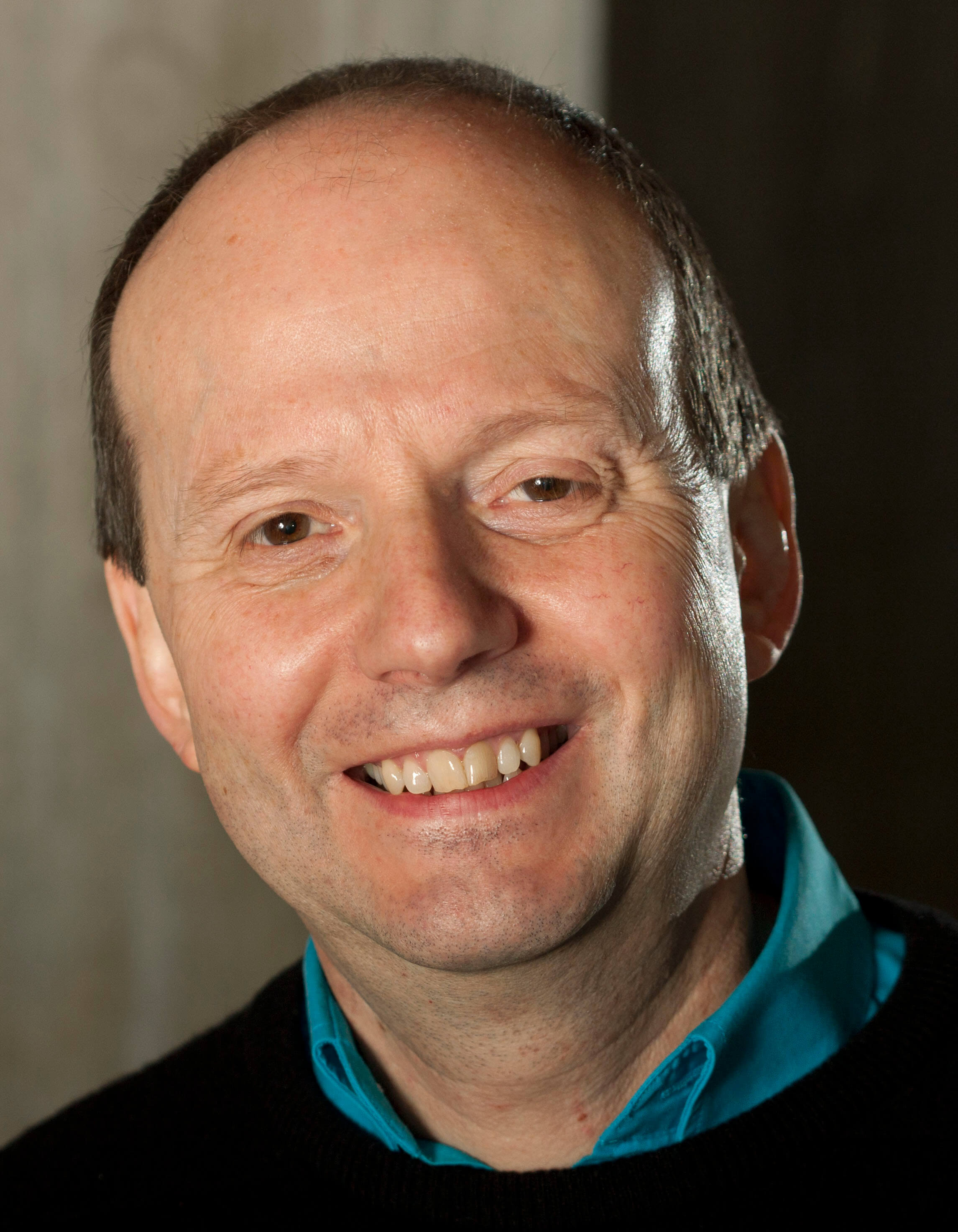
Ian D. Hickson
Center Director
iandh@sund.ku.dk

Center for Chromosome Stability, a Center of Excellence, was funded by the Danish National Research Foundation (DNRF).